Egyptian Mythology

Never-Ending Battles Between God Ra And Indestructible Apophis In Ancient Egyptian Beliefs

Never-Ending Battles Between God Ra And Indestructible Apophis In Ancient Egyptian Beliefs

A. Sutherland – AncientPages.com – Unlike mythologies from other ancient cultures, Egyptian mythology does not have many terrible creatures. The most frightening monster creature in this mythology was Apophis (known in Greek as Apophis and in Egypt as Apep), a gigantic serpent associated with evil and chaos. The snake represented chaos and darkness, and, as […]
Never-Ending Battles Between God Ra And Indestructible Apophis In Ancient Egyptian Beliefs Read More »

Sun God Ra Was Venerated In Every Age Of Ancient Egypt's Long Dynastic History

Sun God Ra Was Venerated In Every Age Of Ancient Egypt’s Long Dynastic History

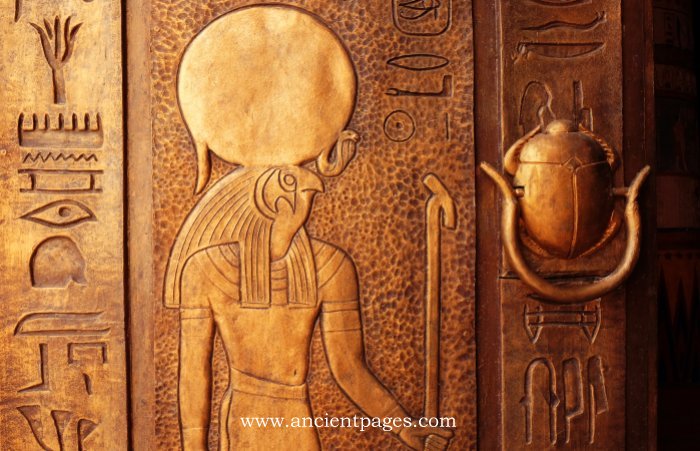
A. Sutherland – AncientPages.com – In ancient Egyptian religion, Ra (Re) was the god of the sun and creation, who was born each morning in the East and died each night in the West. In the night, he traveled through the underworld, full of more terrible monsters. One of them was a deadly and evil

Sun God Ra Was Venerated In Every Age Of Ancient Egypt’s Long Dynastic History Read More »

Gengen Wer - Goose God Who Guarded The Celestial Egg Containing The Life Force In Egyptian Beliefs

Gengen Wer – Goose God Who Guarded The Celestial Egg Containing The Life Force In Egyptian Beliefs

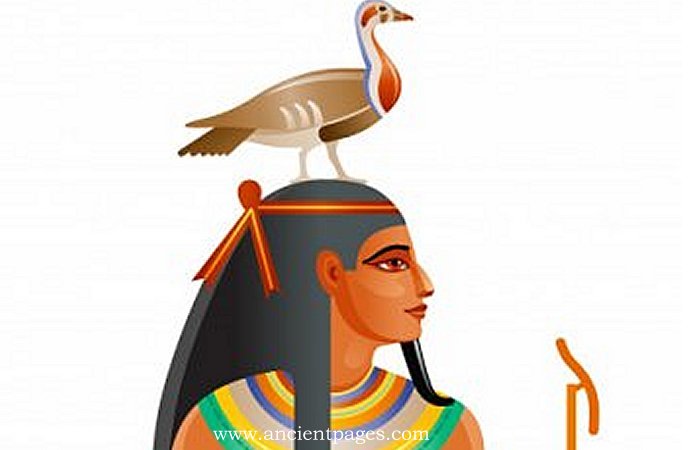
A. Sutherland  – AncientPages.com – The primeval goose shares a close relation with certain deities from ancient Egyptian mythology. Among these is Gengen-Wer, an archaic Egyptian god represented by a goose. This deity was seen as an embodiment of creative energy and was linked to ancient myths of the world’s creation. In the mythology of

Gengen Wer – Goose God Who Guarded The Celestial Egg Containing The Life Force In Egyptian Beliefs Read More »

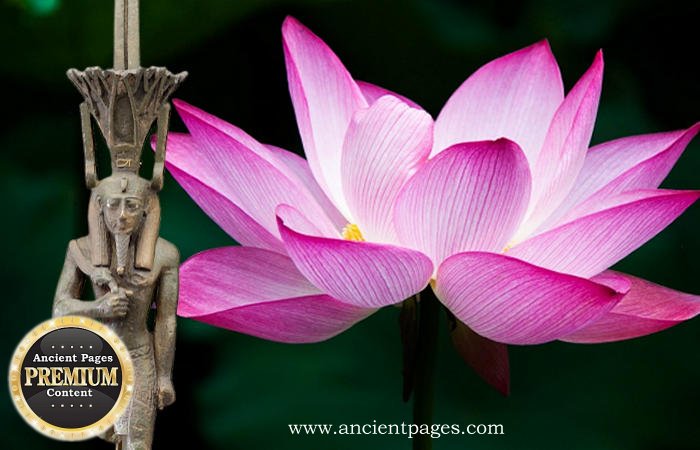
Nefertum - God Of Lotus Blossom, Perfumes, Aromatherapy, Beauty In Egyptian Mythology

Nefertum – God Of Lotus Blossom, Perfumes, Aromatherapy, Beauty In Egyptian Mythology

A. Sutherland  – AncientPages.com – In the religion of the ancient Egyptians, Nefertum (in Greek: Iphtimis) is the personification of the refreshing and most beautiful smell, which, according to the myths, was to set free the creative energy of Re-Atum, and on this belief is based the connection of the name ‘Nefertum’ with Atum. Aromatic

Nefertum – God Of Lotus Blossom, Perfumes, Aromatherapy, Beauty In Egyptian Mythology Read More »

The Egyptian Dream Book Reveals Ancient Predictions Of The Future

The Egyptian Dream Book Reveals Ancient Predictions Of The Future

Ellen Lloyd – AncientPages.com – The Egyptian dream is, alongside the Babylonian dream, one of the most widespread ways of interpreting dreams. The belief that dreams can foretell the future has its roots in the distant past. Ancient people believed in precognitive dreams. These dreams predicted the future through a sixth sense – a way of

The Egyptian Dream Book Reveals Ancient Predictions Of The Future Read More »

Khepri - Egyptian Progenitor God, Spirit Of Life, Resurrection And The Rising Sun

Khepri – Egyptian Progenitor God, Spirit Of Life, Resurrection And The Rising Sun

A. Sutherland – AncientPages.com – Khepri is one of the most important deities of Egyptian mythology. Khepri was the god of creation, the movement of the sun, life, and resurrection. His name, Khepri, is also spelled as Khepera, Khepra, Kheper, and Chepri, which literally means “He Who is Coming into Being.” The root word of ‘Khepri’

Khepri – Egyptian Progenitor God, Spirit Of Life, Resurrection And The Rising Sun Read More »

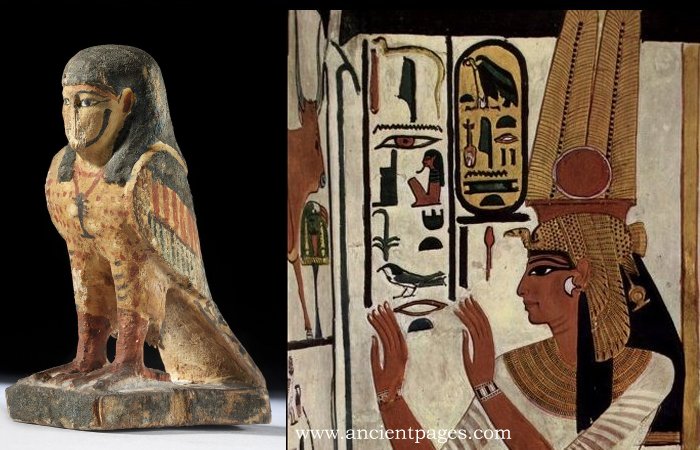
Why Were Ba And Ka Powerful Elements Of Soul In Ancient Egyptian Beliefs?

Why Were Ba And Ka Powerful Elements Of Soul In Ancient Egyptian Beliefs?

A. Sutherland  – AncientPages.com – In Egyptian beliefs, the soul had three parts: the Ka, the Ba, and the Akh.  These three spiritual elements found refuge in the body. Therefore, it was vital to keep the body intact after death and to equip it with the necessary items for life. The Ba was a spiritual

Why Were Ba And Ka Powerful Elements Of Soul In Ancient Egyptian Beliefs? Read More »

Pyramid Texts Of Ancient Egypt That Charted Journey Of Pharaohs Into Afterlife

Pyramid Texts Of Ancient Egypt That Charted Journey Of Pharaohs Into Afterlife

A. Sutherland  – AncientPages.com – Pyramid Texts represent the oldest known collection of ancient Egyptian hieroglyphic inscriptions containing religious texts, elaborate spells (or utterances), hymns, prayers, thousands of lines of fragments of myths and legends, references to mortuary and funerary rites, historical events, festivals. There are also references to astronomical lore and cosmology (the king

Pyramid Texts Of Ancient Egypt That Charted Journey Of Pharaohs Into Afterlife Read More »

Meskhenet: Egyptian Goddess Of Household And Childbirth Who Governed Over Fate And Destiny

Meskhenet: Egyptian Goddess Of Household And Childbirth Who Governed Over Fate And Destiny

A. Sutherland – AncientPages. com – In ancient Egyptian beliefs, Meskhenet (Meskhent) was a goddess associated with childbirth, motherhood, and destiny. The goddess was responsible for creating the Ka and, therefore, was associated with fate, as at the time of a child’s birth, she determined the child’s destiny. Ka represented a part of the child’s soul. Representation

Meskhenet: Egyptian Goddess Of Household And Childbirth Who Governed Over Fate And Destiny Read More »

sokar funerary god

Sokar – Patron Deity Of Ancient Necropolis Of Memphis In Lower Egypt

A. Sutherland – AncientPages.com – In Egyptian mythology, Sokar is an ancient falcon god of the Memphite necropolis, located in Memphis, Lower Egypt. It includes the sites of Giza, Saqqara, and Dahshur, rich in pyramids, mastabas, and tombs. The deity was believed to have many names, and Sokar (Sokhar, Sokaris, Seker) was one of them, but

Sokar – Patron Deity Of Ancient Necropolis Of Memphis In Lower Egypt Read More »