November 2015

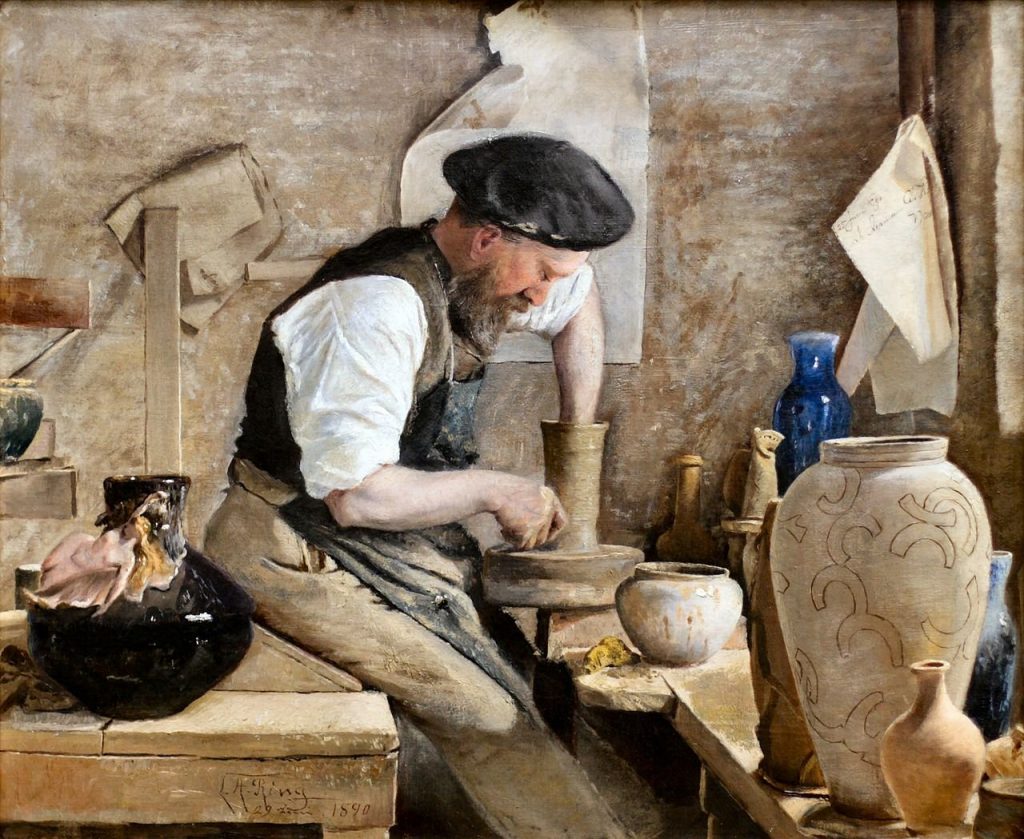
Ancient pottery. Næstved,Sydsjælland

Medieval Rich People Unknowingly Poisoned Themselves With Lead And Other Hazardous Heavy Metals

AncientPages.com – A new study suggests that medieval people were exposed to hazardous heavy metals like lead, which was frequently used to glaze pottery. The poor, who could not afford such items, avoided the high levels of exposure. Being rich in the Middle Ages, had its advantages, but being able to afford expensive and beautiful crockery […]


Medieval Rich People Unknowingly Poisoned Themselves With Lead And Other Hazardous Heavy Metals Read More »

The large number of fava beans unearthed at the site of Ahihud, where seeds of a uniform size were found husked and placed in storage pits, suggests that they were the preferred crop as many as 10,000 years ago.

World’s Oldest Domesticated Fava Beans Were Grown In The Galilee Millennia Ago

AncientPages.com – Researchers say that humans have been eating these beans for many millennia. The world’s oldest domesticated fava beans have been discovered in sites in the central-southern Levant, now the Galilee area of northern Israel. The most ancient beans were carbon dated to over 10,000 years ago. A study of seeds exposed in archaeological excavations in

World’s Oldest Domesticated Fava Beans Were Grown In The Galilee Millennia Ago Read More »

The tombs had characteristics of the Ischma culture. Credits: AP

Four Pre-Inca Tombs Discovered In A Pyramid-Shaped Cemetery, Lima, Peru

AncientPages.com – Archaeologists say they have discovered tombs that are more than 1,000 years old in a pyramid-shaped cemetery in the midst of Peru’s capital, Lima. “There are four human burial sites for adult individuals, three women and one man, who lived between the years 1000 to 1450,” said archaeologist Isabel Flores, director of the program

Four Pre-Inca Tombs Discovered In A Pyramid-Shaped Cemetery, Lima, Peru Read More »

Most of the scenes at Amenhotep-Huy’s tomb represent the vizier’s daily life activities of agriculture, hunting and fishing. It also features scenes of female musicians and dancers and shows Huy, among his family members, being greeted by high priests. Credits: Ministry of Antiquities

2,700-Year-Old Sarcophagus Of ‘High Priest Of God Amun’ Discovered In Luxor

A. Sutherland – AncientPages.com – The sarcophagus of Ankh-f-n-khonsu, a high priest of the ancient Egyptian god Amun Ra, has been unearthed in the west bank of Luxor, Antiquities Minister Mamdouh al Damaty announced Thursday. The sarcophagus, which dates back to the 22nd Dynasty (943B.C-716B.C.,) was found in the tomb of Amenhotep-Huy, who served as

2,700-Year-Old Sarcophagus Of ‘High Priest Of God Amun’ Discovered In Luxor Read More »

The brightly-painted wooden panel, with details picked out in silver and gold leaf, dates from c.1460, is all the more astonishing as it depicts the moment of Christ’s betrayal, by Judas Iscariot.

Rare Medieval Painting Depicting Judas’ Betrayal Of Christ Saved By Reformation ‘Recycling’

AncientPages.com – A rare medieval painting depicting Judas’ betrayal of Christ may have survived destruction at the hands of 16th century iconoclasts after being ‘recycled’ to list the Ten Commandments instead. The brightly-painted wooden panel, with details picked out in silver and gold leaf, dates from c.1460, is all the more astonishing as it depicts the

Rare Medieval Painting Depicting Judas’ Betrayal Of Christ Saved By Reformation ‘Recycling’ Read More »

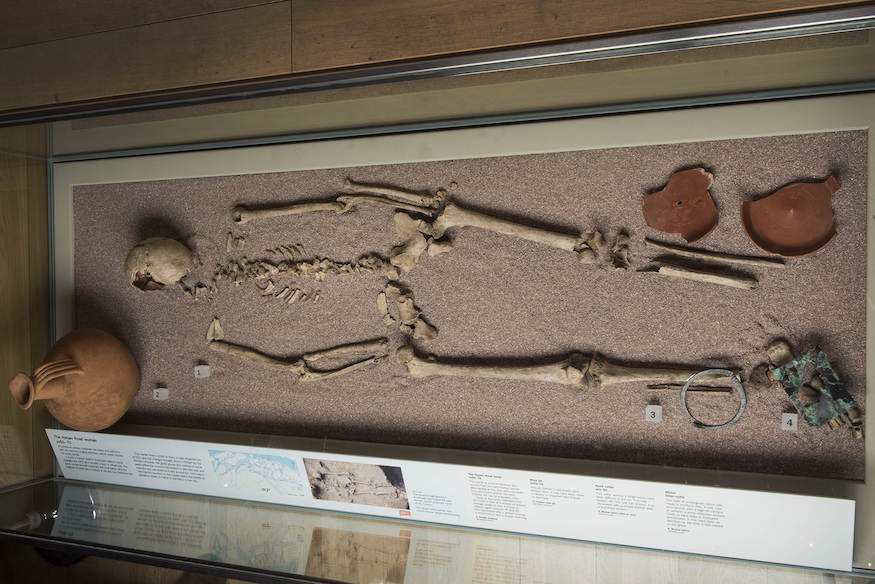
Remains the researchers studied included a man discovered at London Wall, with injuries to his skull that suggest he may have been killed nearby in Londinium’s amphitheatre before his head was dumped into an open pit. He was found to have had black hair and dark brown eyes, and was likely to have been born outside of Britain — with connections to eastern Europe and the Near East.

London Was Always A Multicultural City, DNA Research Confirms

AncientPages.com – London has been a multicultural city since its earliest days as a Roman city, according to new cutting-edge DNA research just published by the Museum of London. Scientists examined four skeletons, looking at sex chromosomes, evidence for disease, travel and diet, and bioarchaeological evidence for health as well as archaeological evidence about identity. “We have always understood that Roman London was

London Was Always A Multicultural City, DNA Research Confirms Read More »

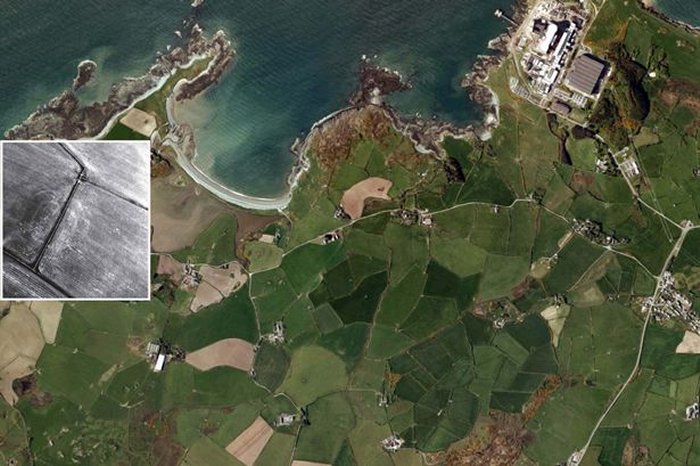
An new Roman era 'fortlet' has been found on Anglesey. Photo credits: Gwynedd Archeological Trust

First Early Roman Fortlet Found On The Isle of Anglesey, North Wales

AncientPages.com – Archaeologists say they have made a ground-breaking discovery on the Isle of Anglesey, North Wales. Experts have found what appears to be a small Roman fort on land near Cemlyn Bay and close to the Wylfa power station. The ‘fortlet’ is thought to date back to the first century AD and is surrounded by a circular

First Early Roman Fortlet Found On The Isle of Anglesey, North Wales Read More »

Neither population increase nor ecological changes provide an adequate explanation for patterns of human movement into new regions which began around 100,000 years ago. She suggests that as commitments to others became more essential to survival, and human groups ever more motivated to identify and punish those who cheat, the ‘dark’ side of human nature also developed.

Did Human Nature’s Dark Side Help Us Spread Across The World?

AncientPages.com – Modern humans spread rapidly around the world from 100,000 years ago but neither population increase nor ecological changes provide an adequate explanation for patterns of this behavior. A study conducted by Dr. Penny Spikins, an archaeologist at the University of York, reveals that changes in human emotional relationships can be the missing link, responsible for the movement

Did Human Nature’s Dark Side Help Us Spread Across The World? Read More »

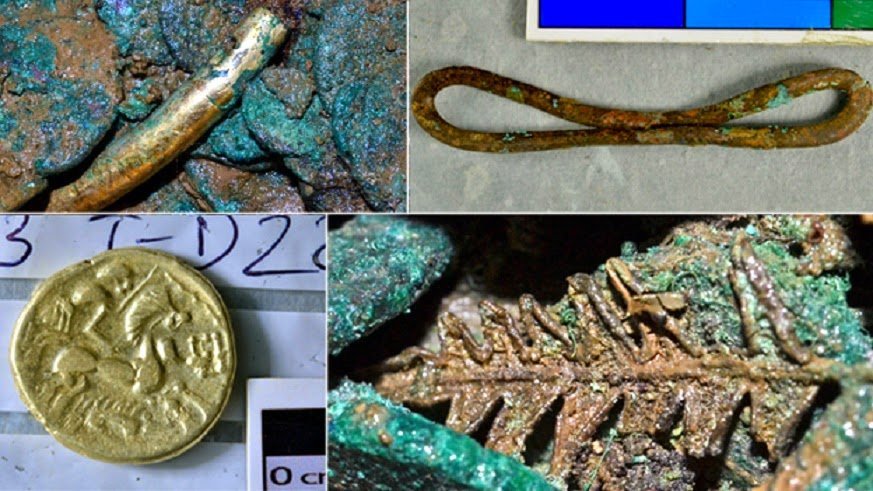
Celtic treasures. Credits: Jersey Heritage

Remarkable Le Catillon II Hoard – World’s Largest Collection Of Celtic Coins And Jewellery

AncientPages.com – Archaeologists allow public to see important phase of conservation work on remarkable Le Catillon II Hoard. Peeling back the top five centimetres of a pile of buried in a field 2,000 years ago, archaeologists in Jersey are preparing to carefully extract a layer of gold jewellery in a specially-constructed laboratory at La Hougue Bie

Remarkable Le Catillon II Hoard – World’s Largest Collection Of Celtic Coins And Jewellery Read More »

Researchers had noticed that people from southern Europe tend to be shorter than those from northern Europe. The new study suggests that the height differential arises both from people in the north having more ancestry from Eurasian steppe populations, who seem to have been taller, and people in the south having more ancestry from Neolithic and Chalcolithic groups from the Iberian peninsula, who seem to have been shorter.

DNA Study Reveals How Europe’s Hunter-Gatherers Adapted To A New Way Of Life – Farming

AncientPages.com – The introduction of agriculture into Europe about 8,500 years ago changed the way people lived right down to their DNA. Now, an international team reports in Nature that researchers can see how natural selection happened by analyzing ancient human DNA. By taking advantage of better DNA extraction techniques and amassing what is to date the largest

DNA Study Reveals How Europe’s Hunter-Gatherers Adapted To A New Way Of Life – Farming Read More »