Evolution

New Model Of Human Evolution Overturns Previous Beliefs A Single African Population Gave Rise To All Humans

New Model Of Human Evolution Overturns Previous Beliefs A Single African Population Gave Rise To All Humans

Jan Bartek – AncientPages.com –  In testing the genetic material of current populations in Africa and comparing against existing fossil evidence of early Homo sapiens populations there, researchers have uncovered a new model of human evolution, overturning previous beliefs that a single African population gave rise to all humans. “This uncertainty is due to limited fossil […]


New Model Of Human Evolution Overturns Previous Beliefs A Single African Population Gave Rise To All Humans Read More »

Humans' Evolutionary Relatives Butchered One Another 1.45 Million Years Ago

Humans’ Evolutionary Relatives Butchered One Another 1.45 Million Years Ago

Conny Waters – AncientPages.com – Researchers from the Smithsonian’s National Museum of Natural History have identified the oldest decisive evidence of humans’ close evolutionary relatives butchering and likely eating one another. View of the hominin tibia and magnified area that shows cut marks. Scale = 4 cm. Credit: Jennifer Clark. In a new study published June 26,

Humans’ Evolutionary Relatives Butchered One Another 1.45 Million Years Ago Read More »

407-Million-Year-Old Plant Fossil Challenges Long-Held Theory On Fibonacci Spirals Found In Nature

407-Million-Year-Old Plant Fossil Challenges Long-Held Theory On Fibonacci Spirals Found In Nature

Eddie Gonzales Jr. – AncientPages.com – A 3D model of a 407-million-year-old plant fossil has overturned thinking on the evolution of leaves. The research has also led to fresh insights about spectacular patterns found in plants. The research published in the journal Science overturns a long-held theory around a famous pattern in nature. Paleontology Ph.D. student at

407-Million-Year-Old Plant Fossil Challenges Long-Held Theory On Fibonacci Spirals Found In Nature Read More »

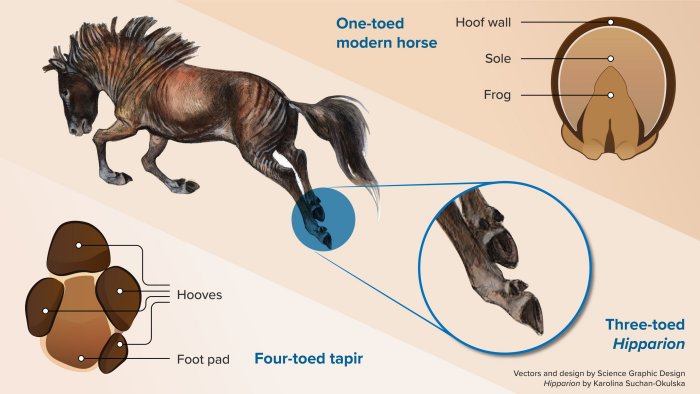
Plantar (underneath) view of feet of a four-toed tapir (left) and a one-toed horse (right) by Nuria Melisa Morales-García. In the middle, a reconstruction of the extinct three-toed horse Hipparion, by Karolina Suchan-Okulska. Overall design by Morales-García.

Modern Horses Have Lost Their Additional Toes, Scientists Confirm

Conny Waters – AncientPages.com – The distant ancestors of modern horses had hooved toes instead of a single hoof, which vanished over time, according to researchers. The animals, such as the Eocene Hyracotherium, had feet like those of a modern tapir: four toes in front and three behind, each individually hooved with an underlying foot

Modern Horses Have Lost Their Additional Toes, Scientists Confirm Read More »

Bone cavities called air sacs appeared in the ancestors of long-necked dinosaurs about 225 million years ago, according to the analysis of a specimen found in Rio Grande do Sul state, South Brazil. The study also shows that air sacs did not evolve as linearly as scientists believe (credit: Márcio L. Castro)'

Earliest Evidence Of Evolutionary Trait That Enabled Dinosaurs To Become Giants – Brazilian Fossil Reveals

Conny Waters – AncientPages.com – The missing link has just been found between the earliest dinosaurs, whose size ranged from a few centimeters to at most three meters in length, and more recent giants that could be more than twice the length of a bus and have so much appeal to the popular imagination. Bone

Earliest Evidence Of Evolutionary Trait That Enabled Dinosaurs To Become Giants – Brazilian Fossil Reveals Read More »

3.2 Million-Year-Old ‘Lucy’ Could Walk On Two Legs - First Hominin Muscle Reconstruction

3.2 Million-Year-Old ‘Lucy’ Could Walk On Two Legs – First Hominin Muscle Reconstruction

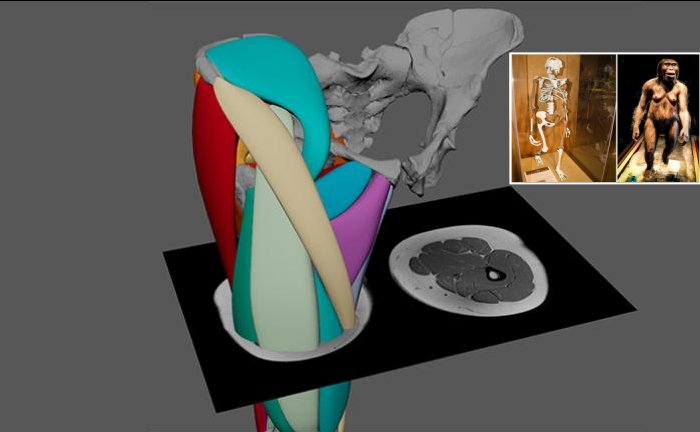
Conny Waters – AncientPages.com – Digital modelling of legendary fossil’s soft tissue suggests Australopithecus afarensis had powerful leg and pelvic muscles suited to tree dwelling, but knee muscles that allowed fully erect walking. Left: Reconstruction of Lucy at the National Museum of Anthropology in Mexico. Image credit: ErnestoLazaros – CC BY-SA 4.0; Right: Lucy –

3.2 Million-Year-Old ‘Lucy’ Could Walk On Two Legs – First Hominin Muscle Reconstruction Read More »

Little Known Neanderthal Technology Examined - Turning Bones Into Tools

Little Known Neanderthal Technology Examined – Turning Bones Into Tools

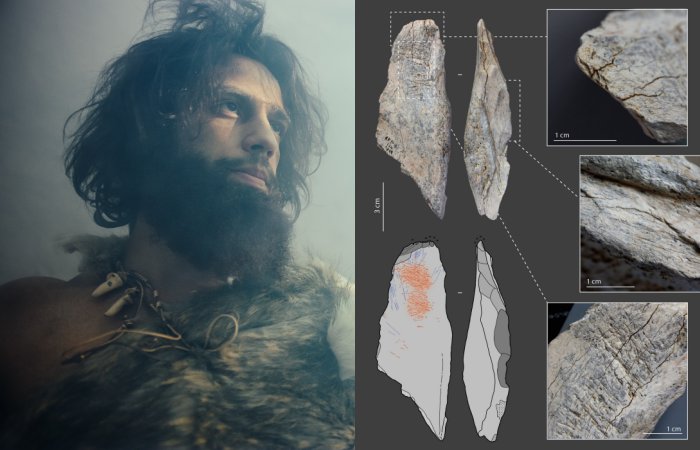
Jan Bartek – AncientPages.com – Were anatomically modern humans the only ones who knew how to turn bone into tools? A discovery by an international team at the Chez-Pinaud-Jonzac Neanderthal site settles the question. Published in PLOS ONE, it sheds light on a little known aspect of Neanderthal technology. From 45,000 years ago onwards, anatomically modern humans were

Little Known Neanderthal Technology Examined – Turning Bones Into Tools Read More »

New Details On Neanderthals - Revealed By Museum Exhibition In Norway

New Details On Neanderthals – Revealed By Museum Exhibition In Norway

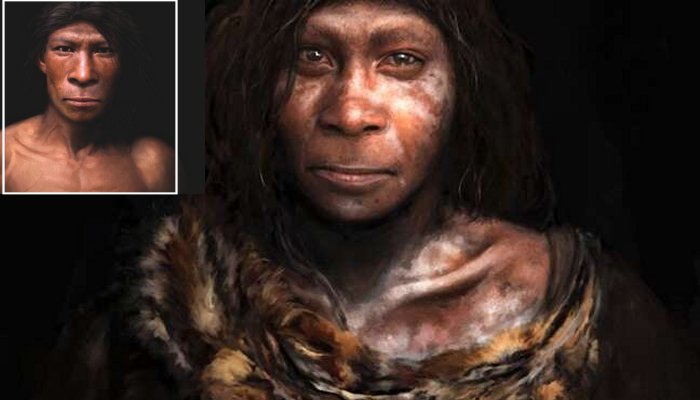
Conny Waters – AncientPages.com – No one knows what happened when we, Homo sapiens, first encountered the Neanderthals. But we know we met. We know that for thousands of years we lived side by side in Europe and Asia. And we know we had children together. So you’re probably carrying around a bit of Neanderthal

New Details On Neanderthals – Revealed By Museum Exhibition In Norway Read More »

Riddle Of Asgardians - New Clues About Origin Of Complex Life Trace Roots To A Common Ancestor

Riddle Of Asgardians – New Clues About Origin Of Complex Life Trace Roots To A Common Ancestor

Jan Bartek – AncientPages.com – Thor, the legendary Norse god from the mythological city of Asgard, is not alone. According to groundbreaking research published in the journal Nature, we humans—along with eagles, starfish, daisies and every complex organism on Earth—are, in a sense, Asgardians. Analyzing the genomes of hundreds of different microbes called archaea, researchers at

Riddle Of Asgardians – New Clues About Origin Of Complex Life Trace Roots To A Common Ancestor Read More »

Laos Fossil Reveals Modern Humans Left Africa And Reached Asia Much Earlier Than Previously Thought

Laos Fossil Reveals Modern Humans Left Africa And Reached Asia Much Earlier Than Previously Thought

Jan Bartek – AncientPages.com – What connects a fossil found in a cave in northern Laos with stone tools made in north Australia? The answer is, we do. When our early Homo sapiens ancestors first arrived in Southeast Asia on their way from Africa to Australia, they left evidence of their presence in the form

Laos Fossil Reveals Modern Humans Left Africa And Reached Asia Much Earlier Than Previously Thought Read More »