Evolution

Evolution Puzzle - Broken Hill Skull And Homo Heidelbergensis Cast Doubt Over Modern Human Ancestry

Evolution Puzzle – Broken Hill Skull And Homo Heidelbergensis Cast Doubt Over Modern Human Ancestry

Jan Bartek – AncientPages.com – The evolution of our species is a fascinating and complicated subject. Scientists often discuss our long-gone relatives, the Neanderthals, and some studies attempt to unravel the truth about the intriguing Denisovans. There are also other ground-breaking discoveries that can shed more light on the evolution of humans. Reconstruction of the […]

Evolution Puzzle – Broken Hill Skull And Homo Heidelbergensis Cast Doubt Over Modern Human Ancestry Read More »

DNA Reveals A Previously Unknown Phase Of Humanity's Great Migration 30,000 Years Ago - What Was The Arabian Standstill?

DNA Reveals A Previously Unknown Phase Of Humanity’s Great Migration 30,000 Years Ago – What Was The Arabian Standstill?

AncientPages.com – Most scientists agree modern humans developed in Africa, more than 200,000 years ago, and that a great human diaspora across much of the rest of the world occurred between perhaps 60,000 and 50,000 years ago. In new research published in Proceedings of the National Academies of Sciences, we have uncovered dozens of distinctive historical

DNA Reveals A Previously Unknown Phase Of Humanity’s Great Migration 30,000 Years Ago – What Was The Arabian Standstill? Read More »

What If Dinosaurs Were Already In Decline When The Asteroid Struck?

What If Dinosaurs Were Already In Decline When The Asteroid Struck?

Conny Waters – AncientPages.com – A trip back through time in Alberta offers evidence to bolster a recent study suggesting non-avian dinosaurs were already waning over the 10 million years before the cataclysmic event. Credit: Public Domain Non-avian dinosaurs were probably in decline long before an asteroid smashing into the Yucatan Peninsula 66 million years ago

What If Dinosaurs Were Already In Decline When The Asteroid Struck? Read More »

Surprising Gene Flow As Result Of Interbreeding Between Neanderthals And Humans 100,000 Years Ago

Surprising Gene Flow As Result Of Interbreeding Between Neanderthals And Humans 100,000 Years Ago

Jan Bartek – AncientPages.com – Using several different methods of DNA analysis, an international research team has found what they consider to be strong evidence of an interbreeding event between Neanderthals and modern humans that occurred tens of thousands of years earlier than any other such event previously documented. The science team says there is evidence

Surprising Gene Flow As Result Of Interbreeding Between Neanderthals And Humans 100,000 Years Ago Read More »

We Now Know What The Earliest Animals Looked Like - Scientists Say

We Now Know What The Earliest Animals Looked Like – Scientists Say

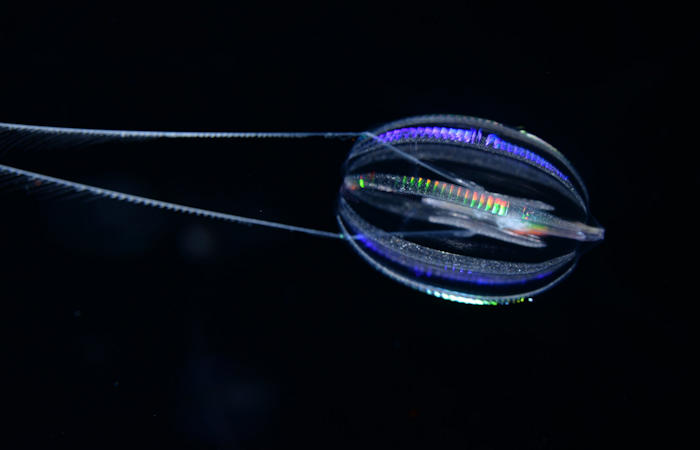
Eddie Gonzales Jr. – AncientPages.com – For more than a century, biologists have wondered what the earliest animals were like when they first arose in the ancient oceans over half a billion years ago. Searching among today’s most primitive-looking animals for the earliest branch of the animal tree of life, scientists gradually narrowed the possibilities

We Now Know What The Earliest Animals Looked Like – Scientists Say Read More »

Human Ancestry Has Been Shaped By Mixing And Matching Alleles - New Study

Human Ancestry Has Been Shaped By Mixing And Matching Alleles – New Study

Jan Bartek – AncientPages.com – The course of human history has been marked by complex patterns of migration, isolation, and admixture, the latter a term that refers to gene flow between individuals from different populations. Admixture results in a blending of genetic lineages, leading to increased genetic diversity within populations. In addition to admixture among

Human Ancestry Has Been Shaped By Mixing And Matching Alleles – New Study Read More »

Different Approach Gives New Understanding Of Human Evolution In Africa

Different Approach Gives New Understanding Of Human Evolution In Africa

Jan Bartek – AncientPages.com – There is broad agreement that Homo sapiens originated in Africa. But many uncertainties remain, and competing theories about where, when, and how. An international research team led by McGill University and the University of California-Davis suggest that, based on contemporary genomic evidence from across the continent, there were humans living

Different Approach Gives New Understanding Of Human Evolution In Africa Read More »

Fossil Evidence Human Hand Evolved From Fish Fins

Extraordinary Fossil Evidence Human Hand Evolved From Fish Fins

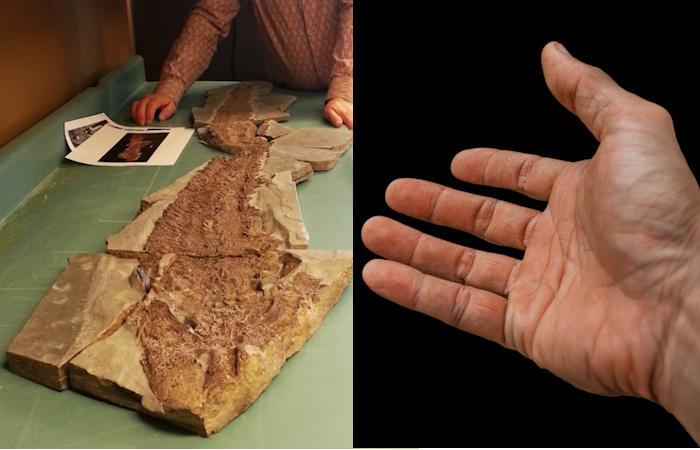
Jan Bartek – AncientPages.com – What can human hands possibly have in common with fish fins? Not much, most would say. However, according to scientists, fossil evidence offers remarkable insight into how the human hand evolved from fish fins. The study is based on examining an ancient Elpistostege fish fossil found in Miguasha, Canada. Complete

Extraordinary Fossil Evidence Human Hand Evolved From Fish Fins Read More »

Rare 518-Million-Year-Old Fossils Of An Unusual-Looking Animal Fill A Gap In The Evolution Of Major Animal Groups

Rare 518-Million-Year-Old Fossils Of An Unusual-Looking Animal Fill A Gap In The Evolution Of Major Animal Groups

Jan Bartek – AncientPages.com – Half a billion years ago, an unusual-looking animal crawled over the sea floor, using tentacles to pick up food particles along the way. Known as Rotadiscus grandis, this animal lived during the Cambrian period, when a burst of evolutionary activity is thought to have given rise to many of the major

Rare 518-Million-Year-Old Fossils Of An Unusual-Looking Animal Fill A Gap In The Evolution Of Major Animal Groups Read More »

Artist illustration of hominins arriving in a multi-biome mosaic landscape. Such environments were greatly preferred by early humans, according to a new study published in the journal Science by a team of scientists from South Korea and Italy (Copyright, IBS Center for Climate Physics). Credit: Institute for Basic Science

Human Ancestors Preferred Mosaic Landscapes And High Ecosystem Diversity – New Study

Conny Waters – AncientPages.com – A new study published in the journal Science by an international team finds that early human species adapted to mosaic landscapes and diverse food resources, which would have increased our ancestor’s resilience to past shifts in climate. Artist illustration of hominins arriving in a multi-biome mosaic landscape. Such environments were

Human Ancestors Preferred Mosaic Landscapes And High Ecosystem Diversity – New Study Read More »