Evolution

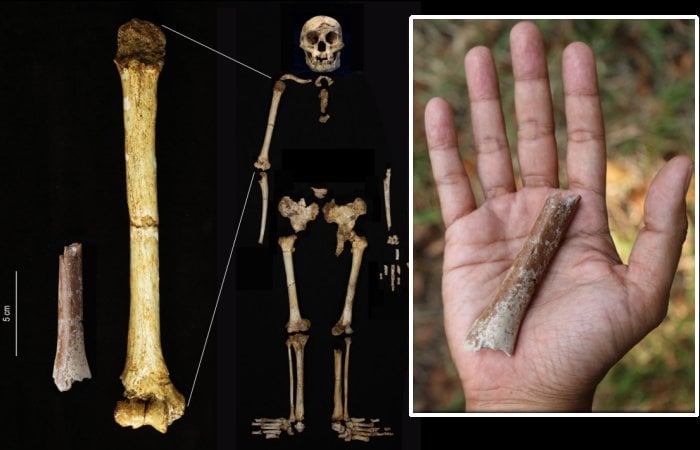
Smallest Arm Bone In Human Fossil Record Illuminates Homo floresiensis Origin

Smallest Arm Bone In Human Fossil Record Illuminates Homo Floresiensis Origin

Eddie Gonzales Jr. – AncientPages.com – A new study co-authored by Griffith University reports the discovery of extremely rare early human fossils from the Indonesian island of Flores, including an astonishingly small adult limb bone. The recently discovered artifacts, estimated to be approximately 700,000 years old, provide significant insights into the evolutionary process of Homo floresiensis, colloquially referred […]

Smallest Arm Bone In Human Fossil Record Illuminates Homo Floresiensis Origin Read More »
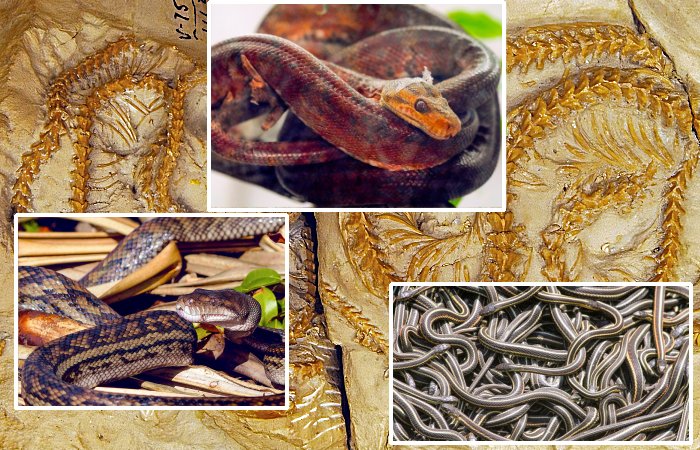
North America's New Snake Species Deepen Our Understanding Of Reptile Social Behavior And Development

North America’s New Snake Species Deepen Our Understanding Of Reptile Social Behavior And Development

Eddie Gonzales Jr. – AncientPages.com – A new species of fossil snake unearthed in Wyoming is rewriting our understanding of snake evolution. The fossilized skeleton of the newly discovered snake species Hibernophis breithaupti, which lived 38 million years ago in what is now western Wyoming, reveals insights into the evolution and social behaviour of its

North America’s New Snake Species Deepen Our Understanding Of Reptile Social Behavior And Development Read More »

Evidence Of Europe's Earliest Human Presence, Dating Back 1. 3 Million Years Found At Venta Micena, Iberian Peninsula

Evidence Of Europe’s Earliest Human Presence, Dating Back 1. 3 Million Years Found At Venta Micena, Iberian Peninsula

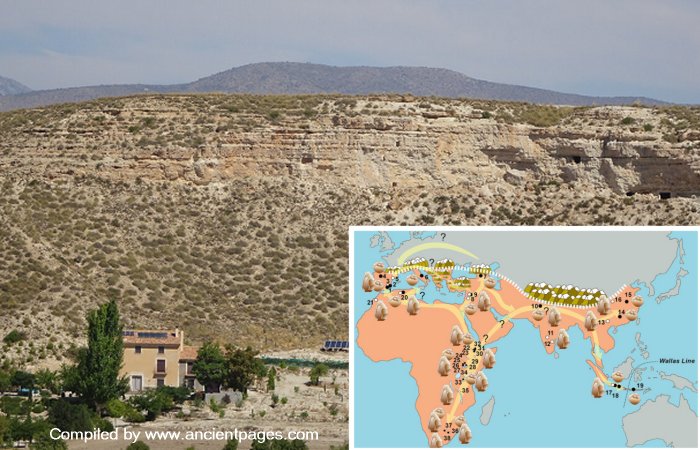
Conny Waters – AncientPages.com – The question of when and how early hominids first arrived in Europe from Africa has been a significant topic of debate in human evolution. Recent geological dating techniques applied to the Orce sites in the Baza basin, Granada, have yielded compelling evidence that may shed light on this controversy. The findings

Evidence Of Europe’s Earliest Human Presence, Dating Back 1. 3 Million Years Found At Venta Micena, Iberian Peninsula Read More »

Lucy, Found 50 Years Ago In Ethiopia, Was Only 3. 5 Feet Tall But Still Influences Our Understanding Of Human Evolution

Lucy, Found 50 Years Ago In Ethiopia, Was Only 3. 5 Feet Tall But Still Influences Our Understanding Of Human Evolution

AncientPages.com – In 1974, on a survey in Hadar in the remote badlands of Ethiopia, U.S. paleoanthropologist Donald Johanson and graduate student Tom Gray found a piece of an elbow joint jutting from the dirt in a gully. The reconstructed skeleton of Lucy, found in Hadar, Ethiopia, in 1974, and Grace Latimer, then age 4,

Lucy, Found 50 Years Ago In Ethiopia, Was Only 3. 5 Feet Tall But Still Influences Our Understanding Of Human Evolution Read More »

Our Lineage's Species Formation Pattern Was Unlike Anything Else

Our Lineage’s Species Formation Pattern Was Unlike Anything Else

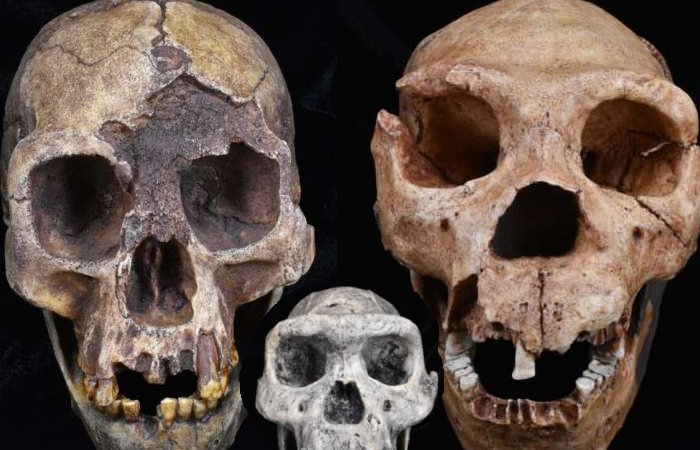
Eddie Gonzales Jr. – AncientPages.com – Our lineage’s species formation pattern was unlike anything else. A cast of the skull of Homo Heidelbergensis, one of the hominin species analyzed in the latest study. Credit: The Duckworth Laboratory, University of Cambridge Competition between species played a major role in the rise and fall of hominins—and produced a

Our Lineage’s Species Formation Pattern Was Unlike Anything Else Read More »

'Blue Higways' Helped Middle Stone Age Humans Who Survived The Toba Supereruption 74,000 Years Ago

‘Blue Highways’ Helped Middle Stone Age Humans Who Survived The Toba Supereruption 74,000 Years Ago

Jan Bartek – AncientPages.com – Researchers working in the Horn of Africa have uncovered evidence showing how Middle Stone Age humans survived in the wake of the eruption of Toba, one of the largest supervolcanoes in history, some 74,000 years ago. The adaptability exhibited by the people of the Middle Stone Age not only enabled

‘Blue Highways’ Helped Middle Stone Age Humans Who Survived The Toba Supereruption 74,000 Years Ago Read More »

Why Animals Shrink Explained With New Evolution Theory

Why Animals Shrink Explained With New Evolution Theory

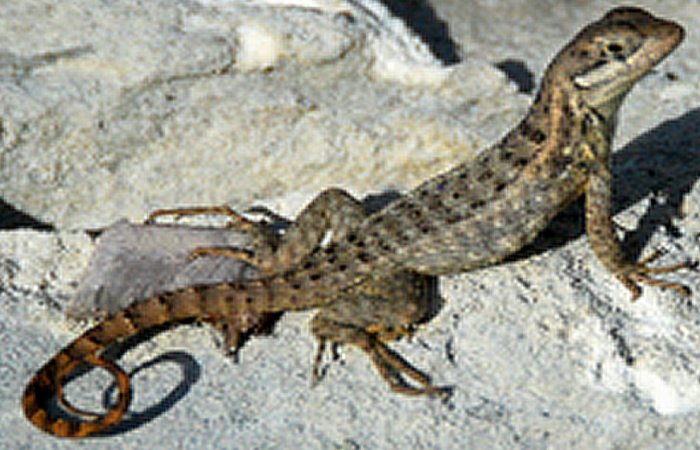
Conny Waters – AncientPages.com – The mystery behind why Alaskan horses, cryptodiran turtles, and island lizards shrunk over time may have been solved in a new study. Image credit: University of Reading   The new theoretical research proposes that animal size over time depends on two key ecological factors: the intensity of direct competition for resources between

Why Animals Shrink Explained With New Evolution Theory Read More »

Evolution Is Not As Unpredictable As Previously Thought

Evolution Is Not As Unpredictable As Previously Thought

Jan Bartek – AncientPages.com – A groundbreaking study has found that evolution is not as unpredictable as previously thought, which could allow scientists to explore which genes could be useful to tackle real-world issues such as antibiotic resistance, disease and climate change. Credit: Adobe Stock – alionaprof The study, which is published in the Proceedings of

Evolution Is Not As Unpredictable As Previously Thought Read More »

Evolution Might Stop Humans From Solving Climate Change - Researchers Say

Evolution Might Stop Humans From Solving Climate Change – Researchers Say

Jan Bartek – AncientPages.com – Central features of human evolution may stop our species from resolving global environmental problems like climate change, says a recent study led by the University of Maine. Credit: Adobe Stock –  Zahid Humans have come to dominate the planet with tools and systems to exploit natural resources that were refined

Evolution Might Stop Humans From Solving Climate Change – Researchers Say Read More »

Early Human Communication May Have Been Influenced By Changing African Landscape - Anthropologists Say

Early Human Communication May Have Been Influenced By Changing African Landscape – Anthropologists Say

Jan Bartek –  AncientPages.com – The shift from dense forests to open plains in Africa may have caused our ancient ancestors to change their vocal calls, research involving Durham University anthropologists has found. The researchers studied audible orangutan calls in a South African savannah to measure the different vowel and consonant-based sounds made by the animals and

Early Human Communication May Have Been Influenced By Changing African Landscape – Anthropologists Say Read More »