Evolution

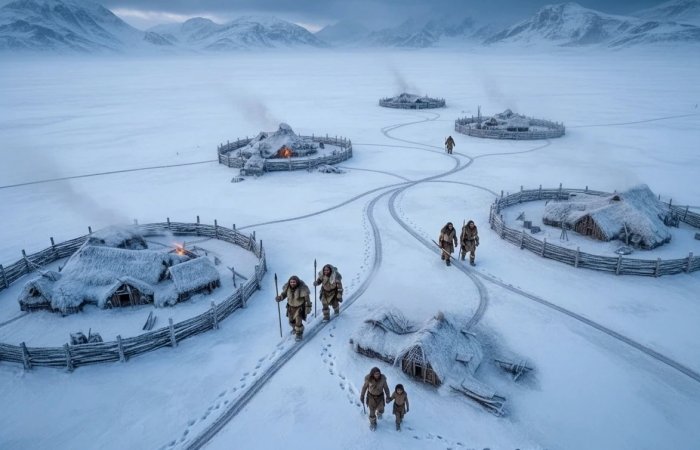
Did Lack Of Solid Connectivity Contribute To The Neanderthals' Extinction?

Did Lack Of Strong Connectivity Contribute To The Neanderthals’ Extinction?

Jan Bartek – AncientPages.com –  Why Neanderthals disappeared while Homo sapiens secured a lasting foothold in Europe remains an open and fascinating question. The answer is undeniably complex and shaped by many intertwined factors, which makes the fresh perspective offered by a new, digitally inspired ecological study especially valuable. Led by Ariane Burke, professor in […]

Did Lack Of Strong Connectivity Contribute To The Neanderthals’ Extinction? Read More »
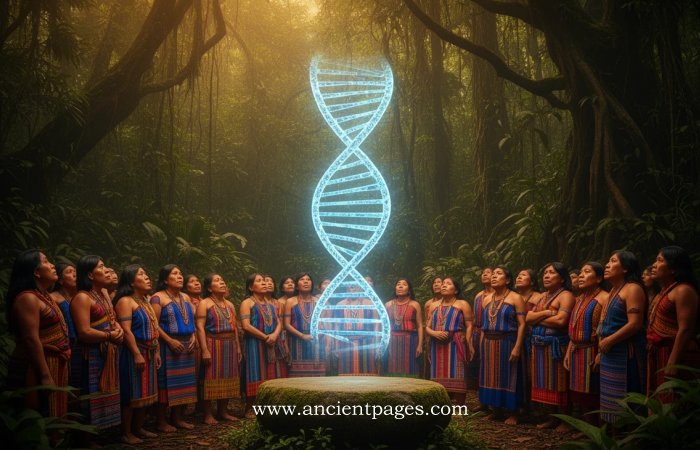
Ancient People Of The Southern Cone - DNA Reveals South America's Human History - From The Pampas To Patagonia

Ancient People Of The Southern Cone – DNA Reveals South America’s Human History – From The Pampas To Patagonia

Jan Bartek – AncientPages.com – A new genetic study offers comprehensive insight into the rich cultural diversity of the so-called Southern Cone – the roughly triangular southernmost part of South America – by showing how strongly it was shaped by extensive human migration. An international research team, led by the Senckenberg Centre for Human Evolution

Ancient People Of The Southern Cone – DNA Reveals South America’s Human History – From The Pampas To Patagonia Read More »

Genetic Profile Of Neanderthals Who Lived 100,000 Years Ago In Stajnia Cave, Poland, Reconstructed

Genetic Profile Of Neanderthals Who Lived 100,000 Years Ago In Stajnia Cave, Poland, Reconstructed

Jan Bartek – AncientPages.com – An international team of scientists has analyzed ancient mitochondrial DNA extracted from eight Neanderthal teeth found in Stajnia Cave, Poland. This research, conducted on remains from a single site north of the Carpathians, has, for the first time, reconstructed the genetic profile of a small group of Neanderthals who lived

Genetic Profile Of Neanderthals Who Lived 100,000 Years Ago In Stajnia Cave, Poland, Reconstructed Read More »

Ancient DNA Reveals Natural Selection Has Shaped Modern Human Genomes More Than Previously Thought

Ancient DNA Reveals Natural Selection Has Shaped Modern Human Genomes More Than Previously Thought

Jan Bartek – AncientPages.com – A large-scale study of ancient DNA from nearly 16,000 individuals spanning more than 10,000 years in West Eurasia shows that natural selection has influenced modern human genomes much more extensively than previously recognized. Earlier research on ancient DNA had identified only about 21 clear cases of directional selection. Directional selection

Ancient DNA Reveals Natural Selection Has Shaped Modern Human Genomes More Than Previously Thought Read More »

Ancient DNA Reveals: A Single Neanderthal Population Survived 75,000 Years Ago, And Its Descendants Spread Across Europe

Ancient DNA Reveals: A Single Neanderthal Population Survived 75,000 Years Ago, And Its Descendants Spread Across Europe

Jan Bartek – AncientPages.com – A recent study combining new DNA evidence with archaeological findings suggests that the last Neanderthals in Europe went through a profound population turnover, leaving them with very little genetic diversity in the millennia before their disappearance around 40,000 years ago. Led by Professor Cosimo Posth at the Senckenberg Center for Human

Ancient DNA Reveals: A Single Neanderthal Population Survived 75,000 Years Ago, And Its Descendants Spread Across Europe Read More »

Neanderthals Used Birch Tar As Medicine During The Last Ice Age

Neanderthals Used Birch Tar As Medicine During The Last Ice Age

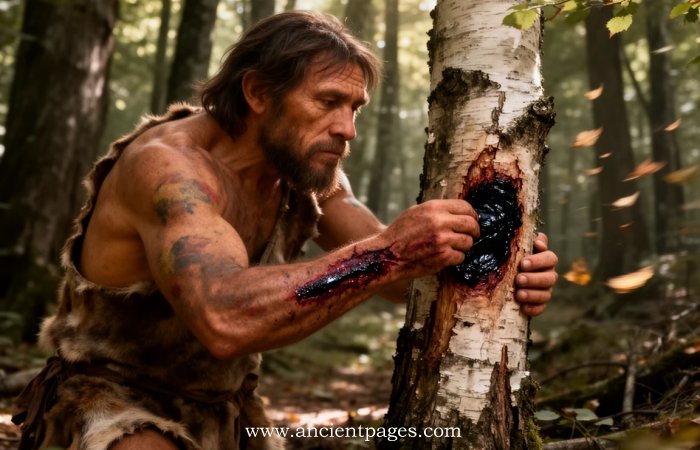
Jan Bartek – AncientPages.com – Birch tar is frequently found at Neanderthal archaeological sites and is well known to have been used as an adhesive for toolmaking. A new study, however, indicates that Neanderthals may have recognized a broader range of uses for birch tar, including its potential in treating wounds. This aligns with observations from

Neanderthals Used Birch Tar As Medicine During The Last Ice Age Read More »

Intriguing Fossil Found At Old Excavation Site Could Rewrite Human Evolution, Scientists Say

Intriguing Fossil Found At The Azmaka Site Could Rewrite Human Evolution, Scientists Say

Jan Bartek – AncientPages.com – A team of scientists has reported an extraordinary discovery deep within an old excavation site, one that may reshape our understanding of human evolution. Their work invites us to appreciate the possibility that our past is far more complex, interconnected, and astonishing than anything we learned from textbooks. This finding

Intriguing Fossil Found At The Azmaka Site Could Rewrite Human Evolution, Scientists Say Read More »

New Findings Rewrite Our Understanding Of Early Hominin Dispersal From Africa To Eurasia

New Findings Rewrite Our Understanding Of Early Hominin Dispersal From Africa To Eurasia

Jan Bartek – AncientPages.com – Recent research suggests that Homo erectus, a direct ancestor of modern humans, may have arrived in China significantly earlier than previously believed. A team of geoscientists and anthropologists, including Christopher J. Bae from the University of Hawaiʻi at Mānoa, has found evidence that H. erectus was present in Yunxian, China,

New Findings Rewrite Our Understanding Of Early Hominin Dispersal From Africa To Eurasia Read More »

Unusual 60,000-Year-Old Engravings Found On Ostrich Eggshells

Unusual 60,000-Year-Old Engravings Found On Ostrich Eggshells

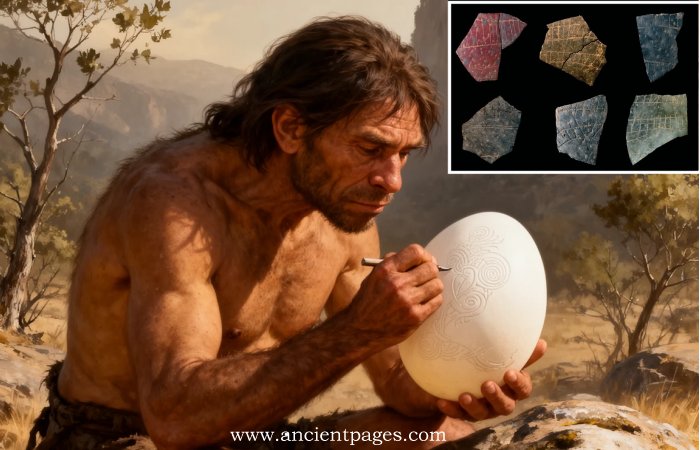
Jan Bartek – AncientPages.com –  A recent discovery offers further evidence that our ancient ancestors possessed greater intelligence than previously believed. At multiple archaeological sites in southern Africa, researchers have uncovered hundreds of unusual fragments of ostrich eggshells. These shells, which date back over 60,000 years, were engraved by Homo sapiens who once inhabited the

Unusual 60,000-Year-Old Engravings Found On Ostrich Eggshells Read More »

600-Million-Year-Old Cyclops-Like Creature Gave Rise To Our Modern Eyes

600-Million-Year-Old Cyclops-Like Creature Gave Rise To Our Modern Eyes

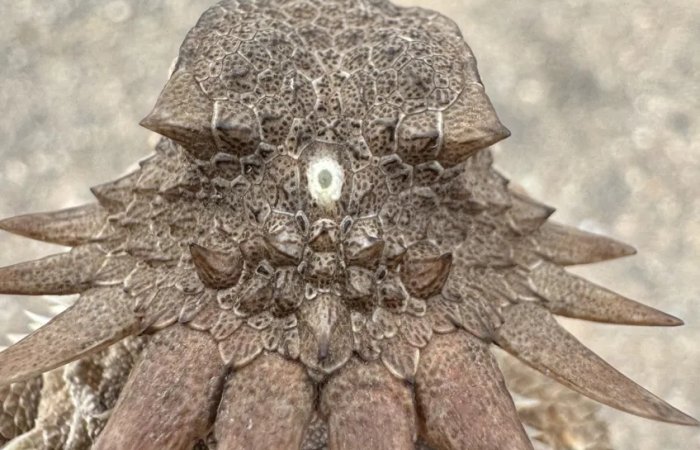
Conny Waters – AncientPages.com –  Scientists have recently uncovered a fascinating finding that challenges traditional views of evolution. According to a new study conducted by researchers from Lund University and the University of Sussex, all vertebrates—including humans—share a common ancestor known as the “tiny cyclops.” This ancient creature had a single eye positioned at the

600-Million-Year-Old Cyclops-Like Creature Gave Rise To Our Modern Eyes Read More »