Evolution

Excavations At Trou Al'Wesse Reveal Traces Of The First Homo Sapiens In Northwestern Europe Around 40,000 Years Ago

Excavations At Trou Al’Wesse Reveal Traces Of The First Homo Sapiens In Northwestern Europe Around 40,000 Years Ago

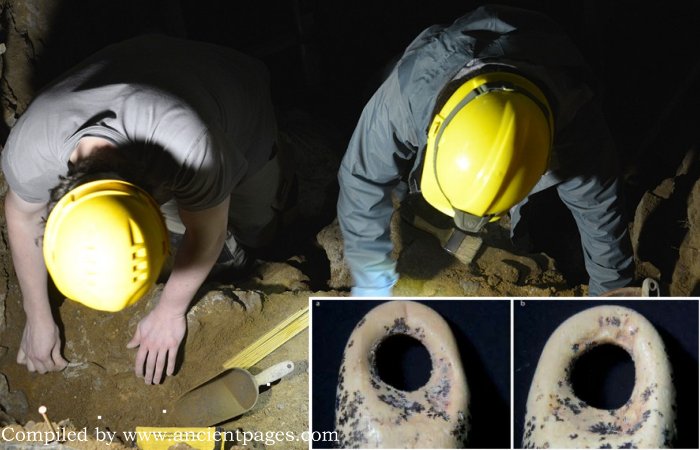
Conny Waters –  AncientPages.com – Archaeologists from the University of Liège are currently engaged in a new excavation campaign at the Paleolithic site of Trou Al’Wesse in Modave, Belgium. This remarkable site offers crucial insights into the settlement patterns of the first Homo sapiens populations in northwestern Europe approximately 40,000 years ago. Additionally, it serves […]


Excavations At Trou Al’Wesse Reveal Traces Of The First Homo Sapiens In Northwestern Europe Around 40,000 Years Ago Read More »

Evolution Study Re-Writes History - Why Were Some Early Male Ancestors Significantly Larger Than Females?

Evolution Study Re-Writes History – Why Were Some Early Male Ancestors Significantly Larger Than Females?

Jan Bartek – AncientPages.com – A recent study has uncovered that males of some of our earliest ancestors were notably larger than their female counterparts. This significant size difference observed in both Australopithecus afarensis, which includes the well-known fossil “Lucy,” and A. africanus, a related species from southern Africa, indicates that these ancient hominins might have

Evolution Study Re-Writes History – Why Were Some Early Male Ancestors Significantly Larger Than Females? Read More »

Neanderthals Carried A Specific AMPD1 Variant Absent In Other Species

Neanderthals Carried A Specific AMPD1 Variant Absent In Other Species

Jan Bartek – AncientPages.com – The enzyme AMPD1 is crucial for muscle energy production and maintaining normal muscular function. Genetic mutations leading to a loss of AMPD1 activity are the most prevalent cause of metabolic myopathy among Europeans, affecting 9% to 14% of the population. Credit: Frank_Rietsch – Pixabay – Public Domain A study published in

Neanderthals Carried A Specific AMPD1 Variant Absent In Other Species Read More »

Disappearance Of Mastodons Still Threatens South America’s Native Forests

Disappearance Of Mastodons Still Threatens South America’s Native Forests

Eddie Gonzales Jr. – AncientPages.com – A new study provides for the first time direct fossil evidence of frugivory in South American mastodons and shows the lasting ecological impact of their extinction. The extinct proboscidean species Notiomastodon platensis is observed feeding on Chilean palm fruit in La Campana National Park. Credit: Mauricio Álvare Ten thousand

Disappearance Of Mastodons Still Threatens South America’s Native Forests Read More »

Neanderthals’ Roads Across Europe And Eurasia: Computer Simulations Show How Ancient Migrations Shaped Human History

Neanderthals’ Roads Across Europe And Eurasia: Computer Simulations Show How Ancient Migrations Shaped Human History

Jan Bartek – AncientPages.com – Recent research has revealed that Neanderthals undertook a second significant migration from Eastern Europe to Central and Eastern Eurasia between 120,000 and 60,000 years ago. The exact routes they took have remained elusive due to the scarcity of archaeological sites linking these regions. However, a new study by a team of anthropologists

Neanderthals’ Roads Across Europe And Eurasia: Computer Simulations Show How Ancient Migrations Shaped Human History Read More »

Ancient DNA Reveals An Unknown Group Lived Between North And South America 6,000 Years Ago

Ancient DNA Reveals An Unknown Group Of People Lived In Colombia 6,000 Years Ago

Jan Bartek – AncientPages.com – Genetic research on Native American populations has significantly enhanced our understanding of the demographic history of the Americas, yet there remains much to uncover. Scientists are exploring how human populations migrated across the Americas thousands of years ago, initially arriving in North America before moving southward. As groups diverged, they developed

Ancient DNA Reveals An Unknown Group Of People Lived In Colombia 6,000 Years Ago Read More »

Fossilized Remains Of Homo Erectus Found On Submerged Sundaland, Java Reveal More Secrets

Fossilized Remains Of Homo Erectus Found On Submerged Sundaland, Java Reveal More Secrets

Conny Waters – AncientPages.com – Recent archaeological finds from the seabed of the Madura Strait separating the Indonesian islands of Java and Madura, have yielded valuable insights into the existence of Homo erectus approximately 140,000 years ago. The Sunda Shelf of Southeast Asia, with the Indonesian archipelago. . The area where the fossils were found (‘sand

Fossilized Remains Of Homo Erectus Found On Submerged Sundaland, Java Reveal More Secrets Read More »

How Did Homo Sapiens Survive The Magnetic North Pole Shift 41,000 Years Ago? Sunscreen, Clothes, And Caves Helped Them

How Did Homo Sapiens Survive The Magnetic North Pole Shift 41,000 Years Ago? Sunscreen, Clothes, And Caves Helped Them

Jan Bartek – AncientPages.com – Recent research indicates that ancient Homo sapiens may have gained significant advantages from the use of sunscreen, tailored clothing, and cave habitation during the period of magnetic North Pole shifts over Europe approximately 41,000 years ago. These technological advancements likely offered protection against harmful solar radiation for Homo sapiens residing in

How Did Homo Sapiens Survive The Magnetic North Pole Shift 41,000 Years Ago? Sunscreen, Clothes, And Caves Helped Them Read More »

Rare Ancient Jawbone Of A Denisovan Who Lived 200,000 Years Ago Discovered In Taiwan

Rare Ancient Jawbone Of A Denisovan Who Lived 200,000 Years Ago Discovered In Taiwan

Jan Bartek – AncientPages.com – Denisovans, an extinct group of human relatives, remain largely enigmatic despite their interactions with Neanderthals and Homo sapiens. Genomic evidence indicates that Denisovans were widely distributed across eastern Asia and possibly Oceania. However, only a few fossils from the Altai Mountains and Tibet have been definitively identified as Denisovan through molecular

Rare Ancient Jawbone Of A Denisovan Who Lived 200,000 Years Ago Discovered In Taiwan Read More »

Mammals Lived On The Ground Several Million Years Before The Dinosaurs' Mass Extinction

Mammals Lived On The Ground Several Million Years Before The Dinosaurs’ Mass Extinction

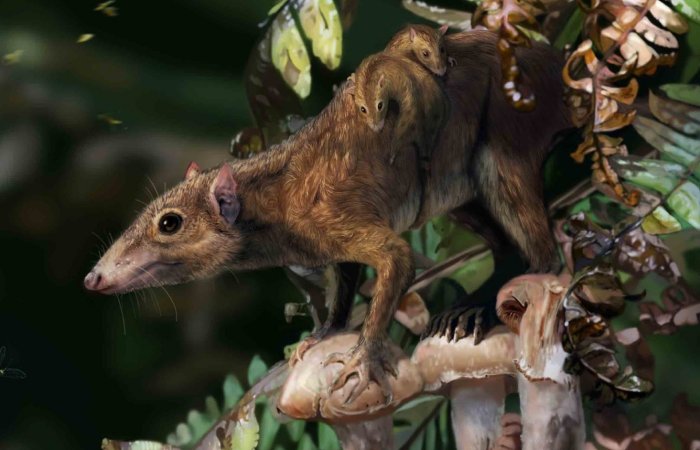
Jan Bartek – AncientPages.com – Recent research led by the University of Bristol has uncovered that many mammals were already adapting to a terrestrial lifestyle several million years before the mass extinction event that eliminated the dinosaurs. This new study offers compelling evidence of this shift, highlighting how mammals were increasingly living on the ground before

Mammals Lived On The Ground Several Million Years Before The Dinosaurs’ Mass Extinction Read More »